
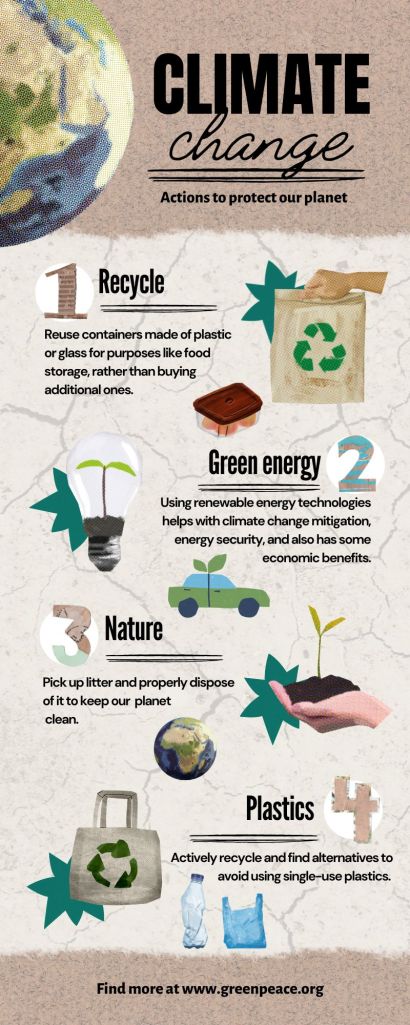
6 Actions to Prevent Climate Change
Climate change is one of the most pressing issues of our time, and it requires collective action to combat its effects. While governments and organizations play a crucial role in implementing large-scale solutions, individuals can also make a significant impact by taking proactive steps in their daily lives. Here are six actions that you can take to help prevent climate change:
- Reduce Your Carbon Footprint: One of the most effective ways to combat climate change is by reducing your carbon footprint. This can be achieved by using public transportation, carpooling, biking, or walking instead of driving alone. Additionally, conserving energy at home by turning off lights and unplugging electronics when not in use can significantly reduce carbon emissions.
- Support Renewable Energy: Transitioning to renewable energy sources such as solar or wind power is a powerful way to reduce greenhouse gas emissions. Consider installing solar panels on your home or supporting community renewable energy projects to promote a sustainable energy future.
- Reduce, Reuse, Recycle: Practicing the 3 R’s – reduce, reuse, recycle – helps minimize waste and conserve resources. By reducing single-use plastics, reusing items whenever possible, and recycling materials like paper, glass, and metal, you can help decrease the environmental impact of production and waste disposal.
- Eat Sustainably: Making mindful choices about your diet can have a positive impact on the environment. Opting for plant-based meals more frequently, supporting local farmers markets, and reducing food waste all contribute to lower greenhouse gas emissions associated with food production.
- Support Conservation Efforts: Protecting natural ecosystems such as forests, wetlands, and oceans is essential for mitigating climate change. Get involved in conservation initiatives in your community or support organizations working to preserve biodiversity and restore degraded habitats.
- Advocate for Change: Use your voice to advocate for policies that prioritize environmental protection and address climate change at local, national, and global levels. Participate in peaceful protests, contact elected officials, and support candidates who prioritize sustainability and climate action.
By taking these actions in your daily life and advocating for broader systemic changes, you can contribute to the collective effort to prevent climate change and create a more sustainable future for generations to come.
9 Essential Tips for Taking Action Against Climate Change
- Reduce energy consumption
- Use public transportation, carpool, or bike
- Conserve water
- Fix leaks, take shorter showers, and use water-saving appliances.
- Plant trees and support reforestation
- Trees absorb CO2 and help combat climate change.
- Reduce, reuse, recycle
- Minimize waste generation and promote a circular economy.
- Support renewable energy sources
Reduce energy consumption
Reducing energy consumption is a key action in preventing climate change. By being mindful of our energy usage and implementing simple practices such as turning off lights when not in use, using energy-efficient appliances, and properly insulating our homes, we can significantly decrease our carbon footprint. Conserving energy not only helps lower greenhouse gas emissions but also leads to cost savings and promotes a more sustainable lifestyle. Small changes in our daily habits can have a big impact on reducing the demand for fossil fuels and mitigating the effects of climate change.
Use public transportation, carpool, or bike
Using public transportation, carpooling, or biking are effective ways to reduce your carbon footprint and combat climate change. By opting for these eco-friendly transportation options, you can help decrease greenhouse gas emissions associated with individual car travel. Not only do these choices contribute to a cleaner environment, but they also promote sustainable mobility and reduce traffic congestion. Making the switch to alternative modes of transportation not only benefits the planet but also improves air quality and supports a healthier community for all.
Conserve water
Conserving water is a crucial step in preventing climate change. By reducing water waste in our daily activities, such as taking shorter showers, fixing leaks promptly, and using water-efficient appliances, we can lower the energy required for water treatment and distribution. Additionally, saving water helps preserve freshwater resources, which are essential for ecosystems and agriculture. By practicing mindful water conservation habits, we not only contribute to mitigating the impacts of climate change but also promote sustainable use of this vital resource for future generations.
Fix leaks, take shorter showers, and use water-saving appliances.
To help prevent climate change, it is important to be mindful of water usage in our daily routines. Simple actions such as fixing leaks, taking shorter showers, and using water-saving appliances can significantly reduce water waste and energy consumption. By addressing these practices, we not only conserve precious resources but also lessen the carbon footprint associated with water treatment and heating processes. Making these small adjustments can have a positive impact on the environment and contribute to a more sustainable future for all.
Plant trees and support reforestation
Planting trees and supporting reforestation efforts are vital actions in the fight against climate change. Trees play a crucial role in absorbing carbon dioxide from the atmosphere, helping to mitigate greenhouse gas emissions and combat global warming. By participating in tree-planting initiatives or contributing to reforestation projects, individuals can actively contribute to restoring ecosystems, enhancing biodiversity, and creating a healthier planet for future generations.
Trees absorb CO2 and help combat climate change.
Trees play a crucial role in combating climate change by absorbing carbon dioxide (CO2) from the atmosphere through photosynthesis. As they grow, trees store carbon in their biomass, helping to reduce the concentration of greenhouse gases that contribute to global warming. By planting and protecting trees, we can harness their natural ability to sequester CO2 and mitigate the impacts of climate change. Supporting reforestation efforts and preserving existing forests are essential steps in maintaining a healthy planet for future generations.
Reduce, reuse, recycle
Reducing, reusing, and recycling are fundamental actions that individuals can take to combat climate change. By reducing consumption, reusing items whenever possible, and recycling materials like paper, glass, and plastic, we can minimize waste production and conserve valuable resources. This simple yet effective approach not only helps reduce greenhouse gas emissions associated with manufacturing new products but also promotes a more sustainable lifestyle that benefits both the environment and future generations.
Minimize waste generation and promote a circular economy.
Minimizing waste generation and promoting a circular economy are key strategies in combating climate change. By reducing the amount of waste we produce and implementing practices that prioritize recycling, reusing, and repurposing materials, we can significantly decrease the environmental impact of resource extraction and disposal. Embracing a circular economy model not only conserves valuable resources but also reduces greenhouse gas emissions associated with manufacturing processes. Through these efforts, we can move towards a more sustainable future where waste is minimized, resources are used efficiently, and environmental degradation is mitigated.
Support renewable energy sources
Supporting renewable energy sources is a crucial step in combating climate change. By transitioning away from fossil fuels and embracing clean, sustainable energy sources like solar and wind power, we can significantly reduce greenhouse gas emissions and lessen our impact on the environment. Investing in renewable energy not only helps to mitigate climate change but also promotes innovation, job creation, and energy independence. By supporting renewable energy initiatives, we can pave the way for a greener and more sustainable future for generations to come.