
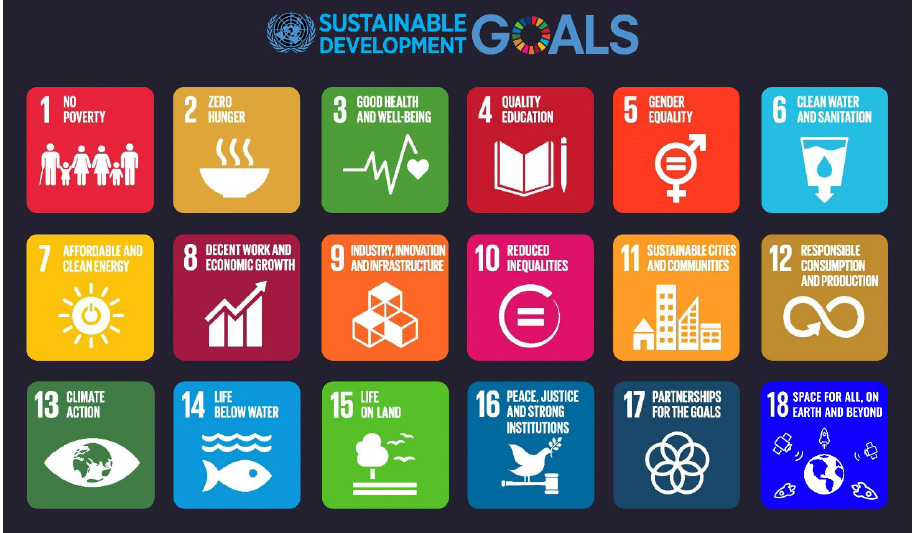
SDG 18: A Proposed Goal for the Sustainable Development Agenda
The United Nations’ 2030 Agenda for Sustainable Development includes 17 Sustainable Development Goals (SDGs), adopted by UN member states in 2015. The goals address challenges such as poverty, health, education, climate change, inequality, and peace. You may also hear people discuss “SDG 18.” Unlike the first 17 goals, however, SDG 18 is not an official United Nations goal. It is a name used for different proposals to address issues that advocates believe deserve greater attention.
What Could SDG 18 Include?
There is no single, universally agreed definition of SDG 18. Different campaigns and organizations have suggested an additional goal focused on topics they see as underrepresented in the existing framework. Proposals have included cultural diversity, digital inclusion, equality and inclusion, and other areas of sustainable development.
These proposals reflect a wider discussion: How can global development goals better recognize people, communities, and challenges that may not be adequately addressed by the current goals? The answer depends on the proposal. Any suggested SDG 18 should clearly explain the problem it seeks to address and how it would complement—not duplicate—the existing goals.
Why Do People Call for an Additional Goal?
Supporters of an SDG 18 often argue that a dedicated goal could bring greater visibility to a priority, encourage governments and organizations to take action, and make progress easier to track. A distinct goal can also help connect related issues that might otherwise be treated separately.
At the same time, adding another goal would not automatically solve a problem. Effective action requires clear targets, reliable data, funding, accountable institutions, and meaningful participation from the communities affected. It is also important to consider how a new goal would work alongside the 17 existing goals, which are closely connected.
How SDG 18 Relates to the Existing Goals
The current SDGs already cover a broad range of social, economic, and environmental concerns. For example, Goal 4 addresses quality education, Goal 5 focuses on gender equality, Goal 10 aims to reduce inequalities, Goal 13 calls for climate action, and Goal 16 promotes peace, justice, and strong institutions. A proposed SDG 18 might highlight a particular gap, but its success would depend on how it supports and strengthens these existing commitments.
Turning the Idea Into Action
Whether or not an official SDG 18 is adopted in the future, people can take practical steps toward sustainable development today. Communities can identify local needs, include affected groups in decision-making, support accessible education and services, and ask public institutions to report transparently on their progress. Businesses and nonprofit organizations can also review how their policies and projects affect people and the environment.
For individuals, meaningful action may begin with learning about the 17 official goals and the different proposals for an 18th. Understanding what is formally part of the UN framework—and what is an advocacy proposal—helps keep the conversation accurate and constructive.
A Goal Still Under Discussion
SDG 18 is best understood as an idea, not an official addition to the United Nations’ Sustainable Development Goals. The proposals associated with it differ, but they share a common purpose: to draw attention to issues that advocates believe are essential to a fair, inclusive, and sustainable future. The discussion invites people to ask what progress should look like, whose priorities are being heard, and how global commitments can lead to lasting change.
SDG 18: 9 Ways to Support and Celebrate Indigenous Languages
- Learn a few words in a local Indigenous language.
- Use Indigenous language names for places respectfully.
- Support Indigenous-led language revitalization programs.
- Read books and stories in Indigenous languages.
- Encourage schools to offer Indigenous language classes.
- Share Indigenous-language music and media.
- Ask permission before recording or sharing cultural knowledge.
- Support funding for language teachers and elders.
- Celebrate Indigenous Languages International Day on March 21.
Learn a few words in a local Indigenous language.
Learning a few words in a local Indigenous language—such as a greeting or a phrase of thanks—can be a small way to show respect for the people and culture connected to a place. Learn from Indigenous speakers or trusted community resources, follow local guidance on pronunciation and use, and remember that languages carry histories and knowledge, not just vocabulary. This simple step can encourage curiosity, support cultural visibility, and open the door to more respectful relationships.
Use Indigenous language names for places respectfully.
Using Indigenous names for places can honor the languages, histories, and continuing presence of Indigenous communities. Before using a name, learn its correct spelling and pronunciation, understand its meaning and context, and follow the guidance of the community connected to that place. Some names may be sacred or not intended for public use, so avoid assuming that every name is appropriate to share. When possible, credit the community or language source, and use Indigenous place names alongside commonly used names in a way that reflects local preferences.
Support Indigenous-led language revitalization programs.
Supporting Indigenous-led language revitalization programs helps communities preserve knowledge, cultural identity, and connections across generations. Long-term funding can support language classes, immersion programs, recordings, dictionaries, and learning materials developed under the guidance of Indigenous communities. Involving elders, educators, families, and young people ensures the work reflects local priorities and keeps languages active in everyday life. These efforts should respect Indigenous self-determination and recognize that communities themselves are best placed to lead decisions about their languages.
Read books and stories in Indigenous languages.
Reading books and stories in Indigenous languages is a meaningful way to honor cultural heritage and support the continued vitality of those languages. Choose works by Indigenous authors when possible, explore stories with family or community members, and support libraries and publishers that make these materials available. Even if you’re learning, reading a few words or listening to an audiobook can help deepen your appreciation for the knowledge, history, and perspectives carried through language.
Encourage schools to offer Indigenous language classes.
Encouraging schools to offer Indigenous language classes can help preserve languages, knowledge, and cultural traditions that have been passed down through generations. When students learn an Indigenous language from fluent speakers and community educators, schools can support cultural pride, strengthen connections between generations, and make education more inclusive. These programs should be developed in partnership with Indigenous communities, with respect for their authority, local priorities, and control over how their languages are taught and shared.
Share Indigenous-language music and media.
Sharing music, films, podcasts, and other media created in Indigenous languages helps more people discover these languages and the cultures they carry. Choose work by Indigenous artists and community-led organizations, credit creators, and share it with context rather than treating it as a novelty. This small action can support cultural visibility, encourage language learning, and help Indigenous voices reach wider audiences.
Ask permission before recording or sharing cultural knowledge.
Ask permission before recording or sharing cultural knowledge, especially when it comes from Indigenous communities or other groups with distinct traditions and protocols. Stories, songs, ceremonies, designs, and teachings may be private, sacred, or collectively held—not material to document or publish without consent. Speak with the appropriate knowledge holders, explain how and where the material will be used, and respect any limits they set, including requests not to record or share it. This practice supports cultural rights, trust, and the respectful exchange of knowledge.
Support funding for language teachers and elders.
Supporting funding for language teachers and elders helps keep Indigenous and minority languages alive across generations. Teachers can create learning opportunities in schools and communities, while elders share the vocabulary, stories, and cultural knowledge that may not be found in textbooks. Grants, fair compensation, and community-led language programs can strengthen cultural identity and ensure that younger generations have the chance to learn and use their heritage languages.
Celebrate Indigenous Languages International Day on March 21.
Celebrating Indigenous languages can support cultural diversity, education, and community-led development—priorities often highlighted in discussions about a proposed SDG 18. The date in this tip needs correction: March 21 is not officially recognized as Indigenous Languages International Day. International Mother Language Day is observed on February 21, and the United Nations’ International Day of the World’s Indigenous Peoples is August 9. These occasions offer opportunities to learn about Indigenous languages and support efforts to preserve and revitalize them.