
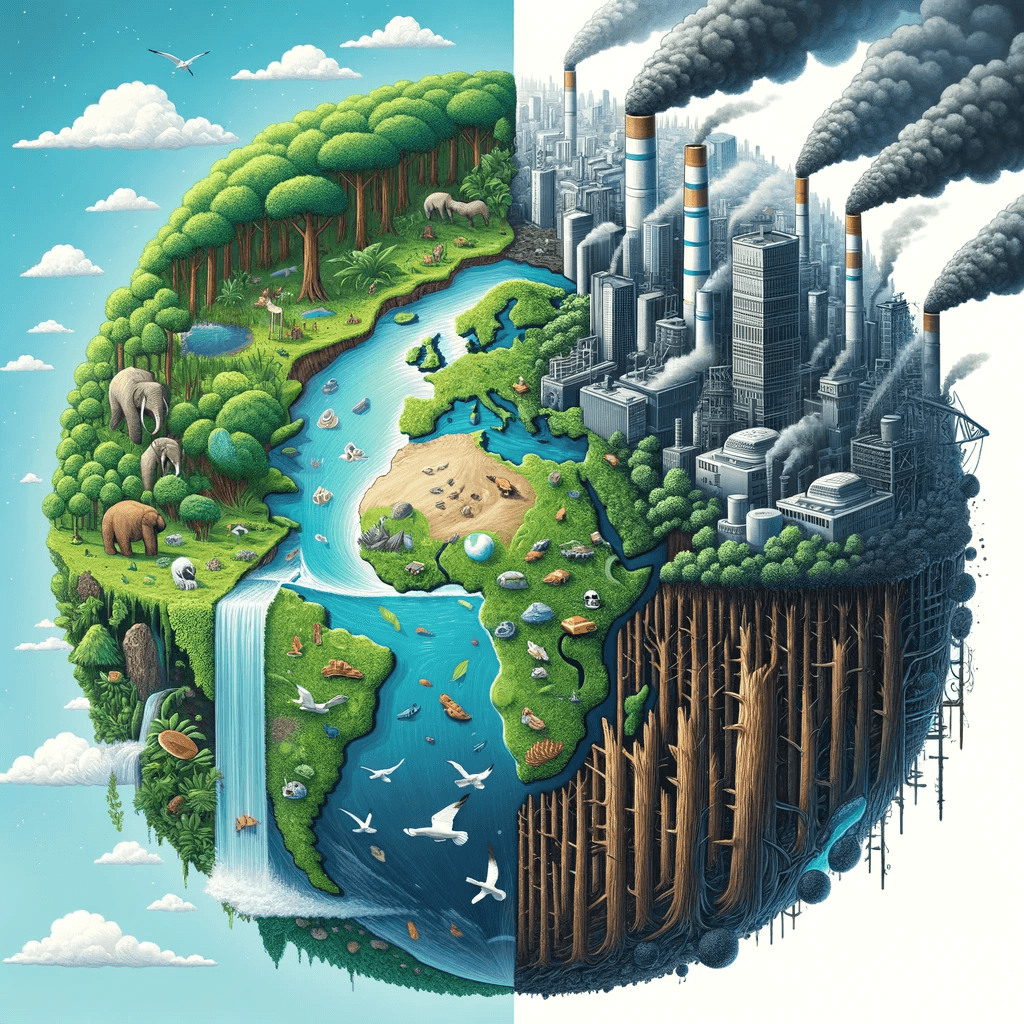
Human Action Is Causing Climate Change
Earth’s climate has changed throughout its history, but the rapid warming observed since the mid-20th century is primarily caused by human activities. Scientists have reached this conclusion by studying temperature records, atmospheric measurements, ocean changes, ice loss, and the physical processes that influence the climate.
How Human Activities Warm the Planet
Earth’s atmosphere naturally holds some heat. Greenhouse gases—including carbon dioxide, methane, and nitrous oxide—help keep the planet warm enough to support life. But human activities have increased the concentration of these gases, strengthening the atmosphere’s heat-trapping effect.
The largest source of human-caused carbon dioxide is the burning of coal, oil, and natural gas for electricity, transportation, heating, and industry. Deforestation also contributes: when forests are cleared or burned, stored carbon is released, and fewer trees remain to absorb carbon dioxide. Agriculture, waste, and the production and transport of fossil fuels release methane and other greenhouse gases.
What the Evidence Shows
Global average temperatures have risen markedly since the late 19th century, with most of the warming occurring in recent decades. Measurements also show that the oceans are warming, glaciers are shrinking, Arctic sea ice is declining, and global sea levels are rising. These changes fit the expected pattern of a planet warming from increased greenhouse gases.
Scientists can distinguish human influences from natural factors such as volcanic eruptions and changes in the Sun’s energy. Natural influences alone do not explain the long-term warming trend. Climate models and observations show that the scale and pattern of recent warming are best explained by human emissions.
Why It Matters
Climate change affects communities and ecosystems in many ways. A warmer atmosphere can intensify heat waves and increase the likelihood of some forms of heavy rainfall. Rising sea levels raise the risk of coastal flooding, while changing temperatures and rainfall patterns can affect water supplies, agriculture, forests, and wildlife. The exact impacts vary by location, and natural variability still influences weather from year to year.
Climate change does not mean that every storm, drought, or hot day is caused by global warming. Rather, warming shifts the conditions in which these events occur, making some types of extreme weather more likely or more severe.
Reducing the Causes and Preparing for Change
Limiting future warming requires reducing greenhouse gas emissions. That includes replacing fossil fuels with low-emission energy, improving energy efficiency, expanding cleaner transportation, reducing methane leaks, and protecting and restoring forests. Governments, businesses, communities, and individuals all have roles to play, though large-scale changes to energy and infrastructure are essential.
Some climate impacts are already underway, so preparation matters too. Communities can improve heat protections, strengthen infrastructure, manage water resources, and plan for flood and wildfire risks. Cutting emissions and adapting to changing conditions are complementary efforts.
The central finding is clear: human activities are changing Earth’s climate, chiefly through greenhouse gas emissions. The choices made now will influence how much warming occurs and how well communities and natural systems can respond.
Understanding Human Impact: Key Questions on Climate Change and Its Causes
- How do human activities affect the environment?
- What is the #1 contributor to climate change?
- Do individual actions affect climate change?
- What do 97% of scientists believe is causing climate change?
- How are human actions causing climate change?
- What are the top 3 causes of climate change?
How do human activities affect the environment?
Human activities affect the environment by changing the air, water, land, and climate. Burning coal, oil, and gas releases greenhouse gases that warm the planet, while deforestation reduces the number of trees that absorb carbon dioxide. Agriculture, manufacturing, transportation, and waste can also contribute to air and water pollution, habitat loss, and declining biodiversity. These effects can be reduced through cleaner energy, more efficient resource use, habitat protection, and sustainable practices.
What is the #1 contributor to climate change?
The largest contributor to human-caused climate change is the burning of fossil fuels—coal, oil, and natural gas—which releases carbon dioxide, the primary greenhouse gas driving long-term warming. These fuels are used to generate electricity, power transportation, heat buildings, and support industry. Deforestation, agriculture, and other activities also contribute, but fossil fuel use is the biggest overall source of human-caused greenhouse gas emissions.
Do individual actions affect climate change?
Yes. Individual actions can help reduce climate change, especially when they add up across many people and influence businesses, communities, and government decisions. Choices such as using less energy, driving or flying less when practical, choosing lower-emission transportation, and reducing food waste can lower a person’s carbon footprint. Individual efforts alone cannot replace large-scale changes to energy, transportation, and industry, but they can contribute to broader progress and help build support for those changes.
What do 97% of scientists believe is causing climate change?
The often-cited 97% figure refers to studies finding that about 97% of climate researchers who actively publish on climate change agree that human activities—especially burning coal, oil, and natural gas and clearing forests—are the primary cause of the warming observed since the mid-20th century. It does not mean that 97% of all scientists were surveyed; rather, it summarizes the strong agreement among climate experts who study the issue.
How are human actions causing climate change?
Human actions are causing climate change mainly by releasing greenhouse gases that trap heat in the atmosphere. Burning coal, oil, and natural gas for electricity, transportation, heating, and industry adds large amounts of carbon dioxide. Deforestation releases stored carbon and reduces the number of trees that can absorb it, while agriculture, landfills, and fossil fuel production emit methane and other heat-trapping gases. As these gases build up, they warm the planet and contribute to changes such as rising temperatures, melting ice, and rising sea levels.
What are the top 3 causes of climate change?
The three leading human causes of climate change are burning fossil fuels, deforestation and other land-use changes, and agriculture. Coal, oil, and natural gas release large amounts of carbon dioxide when used for electricity, transportation, heating, and industry. Clearing forests releases stored carbon and reduces the amount of carbon dioxide trees can absorb. Agriculture also contributes through methane from livestock and rice production, as well as nitrous oxide from fertilizers. Together, these activities increase heat-trapping gases in the atmosphere and warm the planet.